A Beginner's Guide to Vaporwave
Eight great albums for the vaporwave newcomer

Imagine that you’re a teenager in the waning months of 2014. You’re in your first year of high school, with all of its attendant insecurities. To relax, you’ve begun spending time on your phone’s YouTube app, watching videos for an hour or so before you go to sleep.
You normally use YouTube to view gaming, parody, and commentary videos,1 but lately, you’ve been branching out into music. You discover music by listening to full albums that users uploaded onto the site, playing them over and over again until they’re taken down.
One night, you see something strange in the “Up Next” section of YouTube. A bust of a head stands, its hair flowing and mouth gently parted. It is photoshopped into what looks like a pink chessboard. Behind everything sits an image of a city on an island. The Twin Towers dominate the horizon, but the skyline is unfamiliar. It looks like an album, but you’re not entirely sure.
The image conjures up vague visions of a lost past: pre-9/11 New York, classical civilization, late Showa-era Japan, 1990s graphic design.
Intrigued, you click on the video.
The music is even stranger. It sounds like easy listening jazz, half-remembered from waiting rooms and old commercials. But here, it’s slower, stranger. Looped in uncanny ways, the female voice and saxophone accompaniment sound no longer inviting but haunting.
You hear all this but don’t yet have the words to describe it. This music sounds like nothing you’ve ever heard before. After listening to the first two songs on the album, you scroll down into the “Recommended” section, wondering if you can find more albums like this.
That teenager was me, and that was my first time listening to the music genre entitled vaporwave. Defined by slowed, looped, and reverbed samples from 1980s and 1990s music,2 classic vaporwave was intentionally low-fi, evoking a pre-millennial past through the gauzy digital haze of the Internet.
It’s ironic, but a little fitting, that a genre designed to evoke nostalgia for a lost past serves as the soundtrack to my teenage years. When I listen to vaporwave music, part of me is transported back not to the 1980s or 90s, but the mid-2010s when I attended high school.
As more people discovered the genre online, vaporwave exploded in popularity during 2014-2015. It went from a semi-satirical underground genre to the forefront of meme culture. YouTube comments sections soon were awash with people typing their comments in the spacey “A E S T H E T I C S” style frequently used in vaporwave album titles. The term vaporwave became more associated with retro art and memes than any particular style of music.
Put off by this flood of interest, many creators abandoned this term, and began filing their music under increasingly specific subgenres instead. In the comment sections of every new release, people proclaimed “V A P O R W A V E I S D E A D”. By 2016, it seemed like online interest had moved on and vaporwave was a thing of the past.
To the outsider, that is. Though the genre never reclaimed its popularity, this was a time of great innovation within the vaporwave community. Musicians expanded their source material beyond 1980s and 1990s pop music. Producers pioneered new production techniques. Though it remained fragmented, vaporwave entered its most exciting, experimental phase. Niche music festivals like 100% ELECTRONICON and YouTubers like Pad Chennington caused a revival of the term “vaporwave”.
By now, vaporwave resembles less a standard genre of music than a constellation of diverse subgenres, each one loosely linked by a shared aesthetic.
Someone unfamiliar with this genre might wonder how they can begin listening to it. After all, much of vaporwave seems intentionally off-putting. Musicians put song titles in Japanese. Many of the most popular vaporwave albums are not present on streaming services. Enthusiasts make detailed graphics like the one below to define all the vaporwave subgenres, risking more confusion than enlightenment.
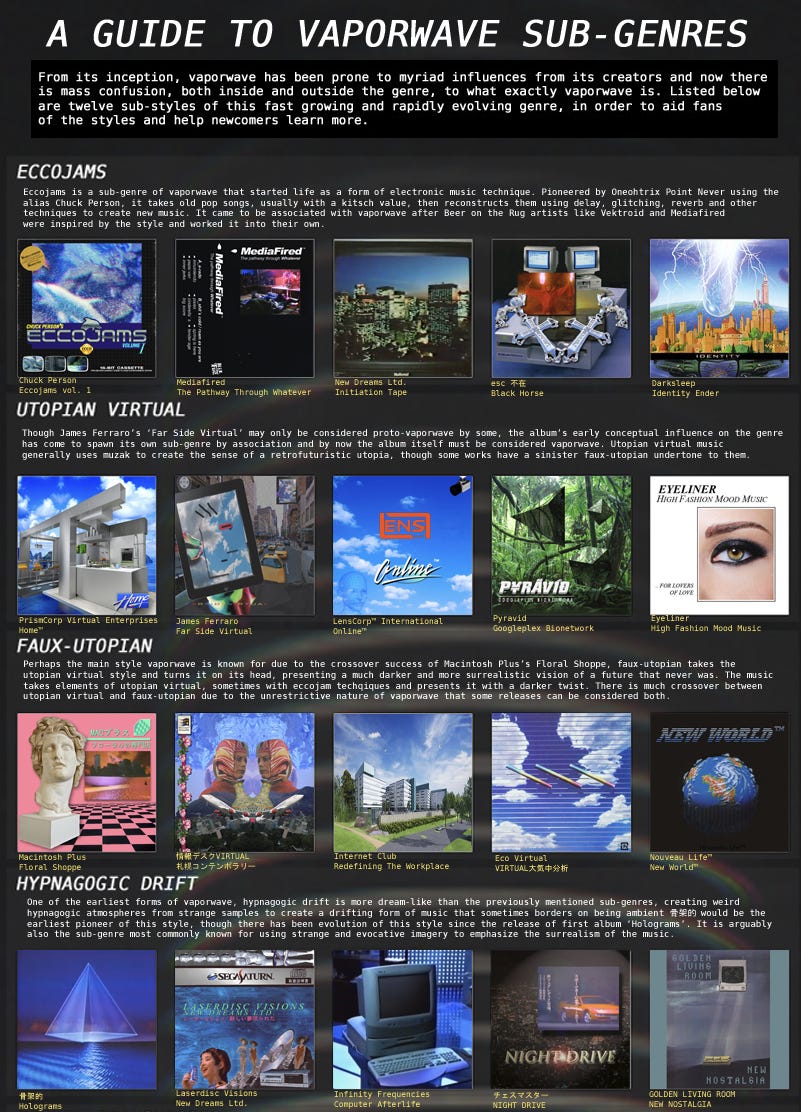
A snippet of the “Guide to Vaporwave Subgenres” graphic I remember from 2015. I love this type of stuff, but it gets confusing and arbitrary fast. You can find this guide and more on the Vaporwave subreddit.
That’s where I come in. I’ve been listening to vaporwave on-and-off since 2014. Instead of going over the confusing subgenres, I will provide my favorite vaporwave albums, linked and embedded into this article. Each album will exemplify a particular style of vaporwave. I will write a little about why I like each one. If you enjoy a particular album, I will link some other albums that capture the same “feel” for further listening. Consider it a syllabus for Intro to Contemporary Vaporwave, curated by a somewhat opinionated professor (no college credit included).
The albums will be mostly released after 2015 to give some space to underrated gems released after the genre’s peak. As much as I love Floral Shoppe and Birth of a New Day, they already appear on plenty of “best of vaporwave” lists. I want to provide some space to great albums more people need to hear. My suggestions will also all put a distinct spin on the standard vaporwave formula.
My Essential Vaporwave Albums
Computer Death by Infinity Frequencies
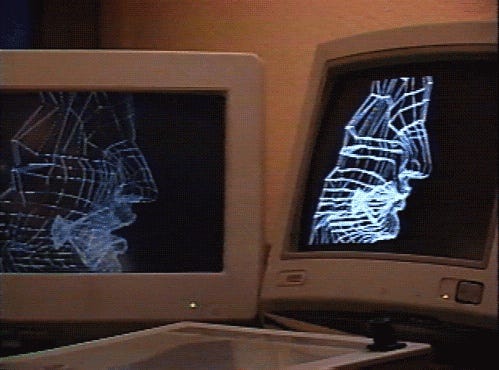
Remember how I said I would try to pick out more obscure vaporwave albums, ones released recently? Yeah, I already broke both parts of that rule. Released in 2013, Computer Death is an early vaporwave classic that stands the test of time and warrants inclusion on this list because of how good it is.
Computer Death is an example of “signalwave,” vaporwave music comprised almost entirely out of old broadcasts that are looped and edited into something new. Released at a time when much of the vaporwave genre focused on digital utopias, Computer Death is a concept album about something far less exotic: a computer growing old and dying, shuffling through all its saved memories before shutting down forever.
The fuzzy, looped samples that comprise most of this album evoke the image of declining old computer hardware: the hiss of a tape loop, the distortion of a bitcrushed advertisement. Many of the samples feel old and orchestral, giving the album a digital-Shining feel.
This is a great, darker, ambient album that could bring a tear to your eye. Listening to this album evokes the same sort of sadness I feel when looking at a broken toy or faded cartoon character. It reminds me of The Caretaker’s dementia-themed ambient work Everywhere at the End of Time (though Computer Death is much shorter).
The final track is a highlight. I’m not going to spoil too much, but it might be the only track that pulls genuine pathos out of a 1970s perfume commercial.
The 1979 perfume commercial sampled by “Majesty”, the final track on the album. Fun fact: this commercial was directed by Ridley Scott.
This album is not for everyone, but if you’re looking for something contemplative and depressing that borders on ambient, this is a great choice. No other vaporwave album uses its samples more effectively to make the listener sad.
For fans of: The Caretaker’s Everywhere at the End of Time, William Basinski, lost media.
Best listened to: Late at night, working on a project past due.
Standout track: “Majesty”
If you liked this, you might also like:
The album’s two sequels, Computer Decay and Computer Afterlife.
Eco Virtual’s Atmospheres, a less depressing example of broken transmission-style vaporwave that uses samples from the Weather Channel.
LSD Pacifica by Khoven
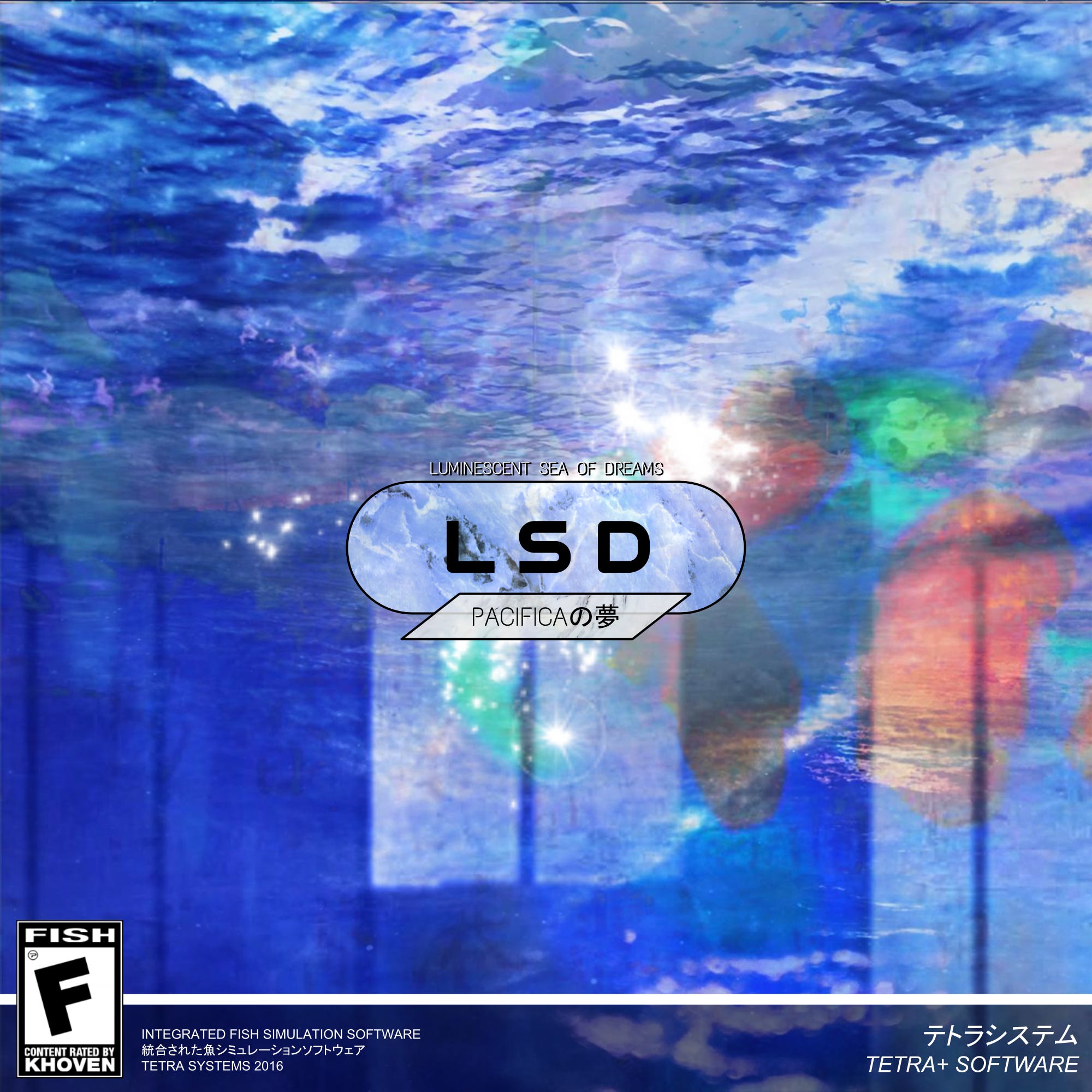
This might be the most obscure album that I’m including here. It’s only available on YouTube, and the video has less than 2,000 views. Once, it was found elsewhere, but it was removed from the Tetra Systems record label (I’m not sure why). The sample on the final track also leans a bit close to plagiarism for my comfort. But I’m including this album because it’s just so damn good.3
While many other albums in the fishvapour (ocean-themed vaporwave) subgenre tend towards a calm and meditative ambience, LSD Pacifica (short for Luminescent Sea of Dreams) does something different. With its bubbly arpeggioes and IDM-inspired drums, this album turns the oceanic aesthetic into a virtual lagoon: sunstreaks dappling through a virtual lagoon, low-poly fish jet about your feet as they sink into the sand. Pure, unadulterated, fishy joy.
There’s an extended version out there, but I think the original is better. It is linked below.
For fans of: Aphex Twin’s Selected Ambient Works 85–92, Donkey Kong Country, Oceanic nature documentaries.
Best listened to: Outside, on a warm day, overlooking a koi pond, looking down as the fish swim around.
Standout track: “DEEP太平洋” [at 2:17 in the video below]
If you liked this, you might also like:
s a k i 夢’s 夢の中で失われました (Lost in a Dream): The gentler, more ambient side of fishvapour.
Riverwave’s Surubi Spirit ナマズの精神 : More casual and chillwavey than LSD: Pacifica. The sample on Track 2 is sublime.
Virtues (Deluxe) by Atrius and FIBRE

Now, we’re moving to the more danceable side of vaporwave: the style known as future funk. Future funk sounds a lot more upbeat than “classic” vaporwave, but both styles share musical techniques: pitch-shifting and looping samples of funk and city pop tracks from 1975 to 1990 (or so).
Future funk diverges from vaporwave by adding a four-on-the-floor beat to a track, speeding the samples up a little instead of slowing them down. The end result is something that puts the dance in electronic dance music. It refines the source material into pure corn syrup for the ears, while keeping an analog funky groove. Listen to a little. You might become addicted.
FIBRE is one of the best artists in the future funk scene. He moved from a French house-adjacent sound to a sample-heavy, anime-inspired sound that is entirely his own. This album captures him and Atrius at their prime, having workshopped these tracks for years. Virtues (Deluxe) is a remastered, rereleased version of one of the best future funk albums, and it is a great cross-section of the genre’s evolution.
For fans of: Daft Punk, Sailor Moon, upbeat music.
Best listened to: Exercising, dancing, working, doing something.
Standout track: “Odyssey”
If you liked this, you might also like:
Acid Arcadia by VAPERROR: A difficult album to describe. Think Mario, Donkey Kong, and Kirby at a drug-fuelled rave.
A Million Miles Away by Macross 82-99: For a more City Pop-inspired sound, you can’t get better than this.
A C A D E M Y by Hallmark ‘87
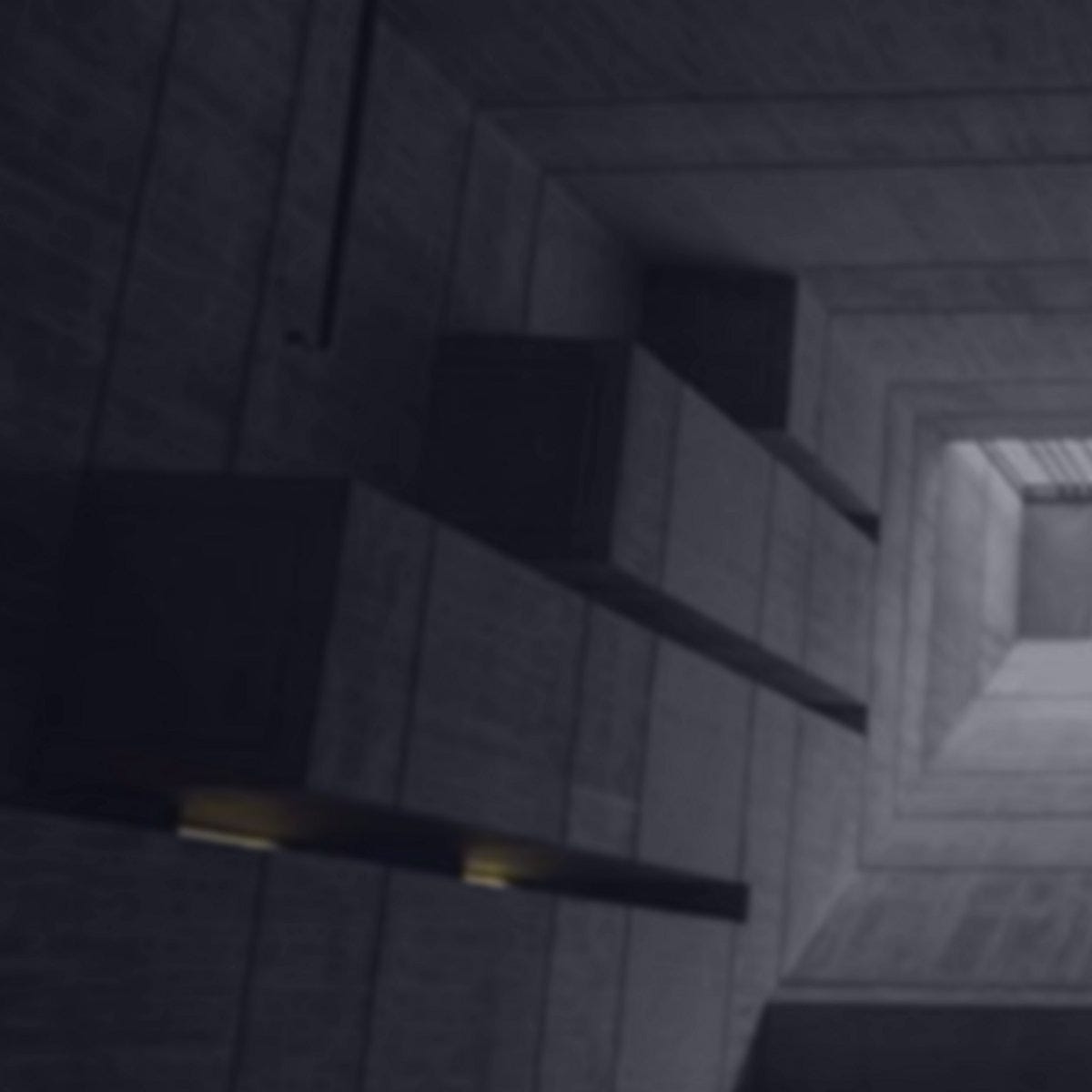
There’s a certain subcategory of ambient-leaning vaporwave music that I like to classify under the label hyperobject. This is music that captures the feeling of approaching a massive structure. The closer you get to it, the larger it looms. It’s the auditory equivalent of the Backrooms copypasta (and now movie), or Jorge Luis Borges’ Library of Babel. A lot of ambient music makes me feel this way, but there are some vaporwave albums that evoke this image explicitly.
Hallmark ‘87’s A C A D E M Y is one. Listening to this album makes you feel like you’re in a vast futuristic research facility with gray seamless walls and low ceilings. The halls sprawl infinitely; mysterious experiments take place in the rooms around you. There’s a sense of whimsy but also dread: an unknowable presence lurking in those endless corridors.
If you’ve ever been inside a massive hospital, university, or library and felt unsettled by its sheer size, A C A D E M Y captures that emotion perfectly.
For fans of: Liminal spaces, Franz Kafka, William Basinski
Best listened to: While exploring a new city on a misty day, towers half-hidden by the fog.
Standout track: “B É T O N B R U T”
If you liked this, you might also like:
A T R I U M by Hallmark ‘87: The album’s predecessor and companion piece. It’s darker and less casually listenable than A C A D E M Y, but still great.
Building a Better World by 猫 シ Corp. & t e l e p a t h テレパシー能力者: Another ambient vaporwave hyperobject album, this one with cyberpunk stylings. It reminds me of an early morning plane flight as the sun rises over the metropolis you’re landing in. It might have the best album cover in all of vaporwave.
Hypnagogia by Dan Mason

The boundary between vaporwave and similar genres of music is porous at best. Dan Mason’s Hypnagogia could just as easily be classified as chillwave or bedroom pop. But Dan Mason got his start in the vaporwave scene. Though his music has diverged from standard vaporwave towards a more personal, singer-songwriter sound, his nostalgia-drenched sensibilities and history with the scene keep him under the broad “vapor” umbrella.
If you find other vaporwave music unsettling, inhuman, or just plain silly, check out Dan Mason’s Hypnagogia. With this album, he ditched the vocal samples for his own vocals, releasing a reverb-drenched indie album about someone struggling with sleeplessness. Most of the elements of standard vaporwave are there, but the voice being manipulated is Dan Mason’s own.
This album recalls the 2000s-era experiments of Daft Punk and Kanye West. Dan Mason pitch-shifts his voice in real time not to cover up his vulnerability but to bring it out. This album is a testament to technology’s power to reinforce the human elements in music. This is a contrast to most vaporwave, which uses technology to turn the human voice into something artificial. This album strips away most of vaporwave’s usual concerns. Here’s a man making music in his bedroom about his need for sleep. There’s nothing more human than that.
For fans of: David Bowie, Sufjan Stevens, singer-songwriter-driven indie synthpop.
Best listened to: On a long walk after a night of sleeplessness.
Standout track: “Melatonin High”
If you liked this, check out:
Void by Dan Mason: Released around the same time as Hypnagogia. It has the same synth-y melancholy feel to it, but is less of a concept album.
Slide by George Clanton: Now we’ve delved almost fully into synthpop territory, but Clanton manipulates his samples just so to remind you what scene he got his start in. Fun and infectious.
Mallsoft Odyssey by Sonig 991
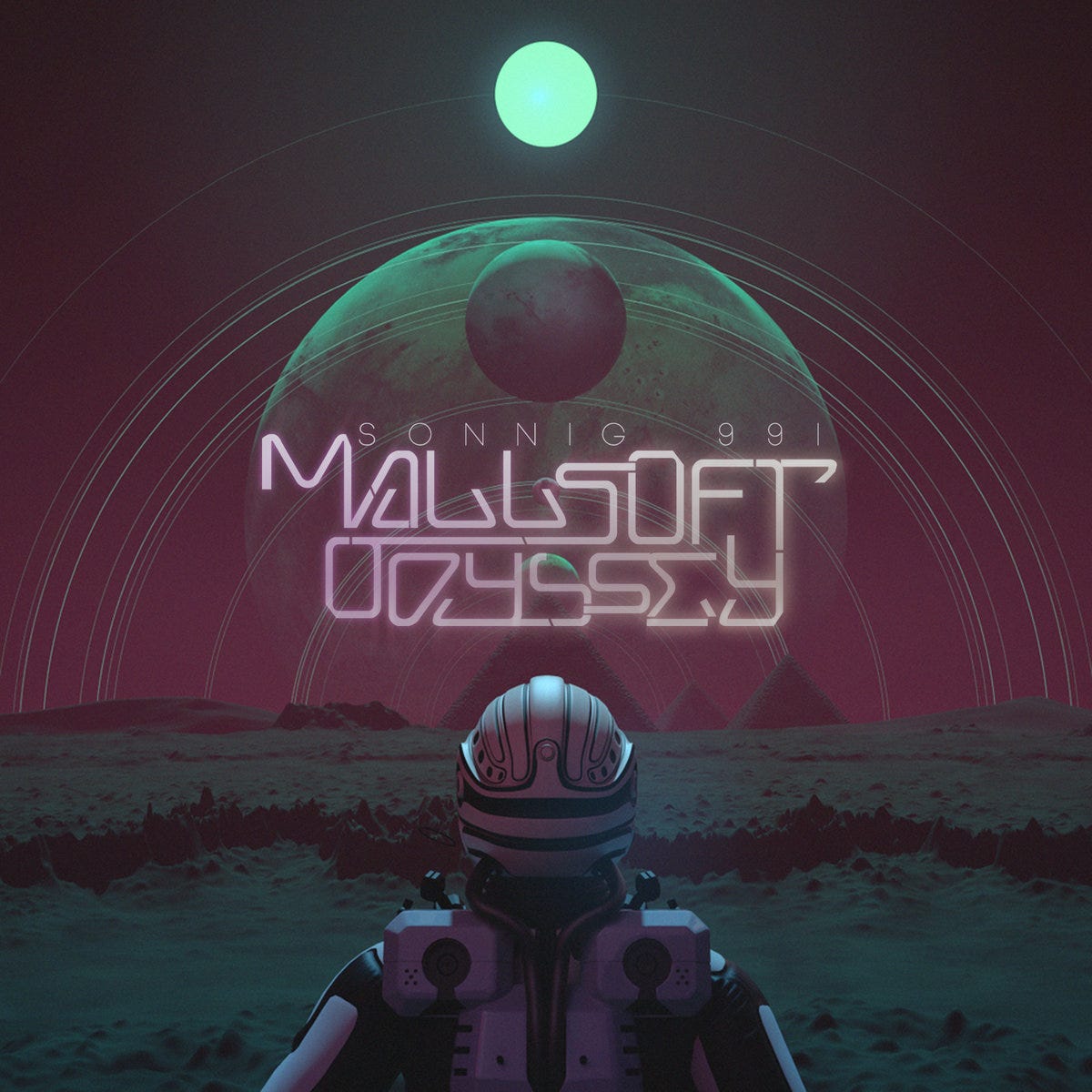
Vaporwave relies heavily on sampling other tracks. Different artists use this technique differently, though. Sometimes, artists modify a sample until it’s unrecognizable, almost turning it into an instrument of its own. Other times, the songs being sampled are recognizable, but are modified just enough to have a different feel to them, sounding both familiar and strange.
Compared to most vaporwave albums, there are few samples on Mallsoft Odyssey. The interesting thing is that Sonig 991 takes another song and, instead of just looping a small part of it, he mixes it with his own instrumentation. This turns a simple pop song into a veritable symphony. Plus, his sample choices are inspired and stretch beyond the typical 70s-to-90s vaporwave source material grab bag. Tame Impala’s “Let It Happen”, anyone?
I also selected this album because it covers so much stylistic ground. This album bills itself as mallsoft, short for mall-inspired ambient vaporwave, but it’s too upbeat to be ambient. Rather, this album feels like a thrill ride through a carnivalesque mall, something closer to Willy Wonka and the Chocolate Factory4 than any mall I know. Colorful, a little uncanny, this album’s full of familiar songs distorted just enough that you’re not sure whether to smile or be scared. Mallsoft Odyssey is difficult to forget.
For fans of: Neil Cicierega, mashup music, inadvertently terrifying children’s movies.
Best listened to: While exploring something abandoned.
Standout track: “BERLIN WINDOWS SHOPPING PT. IV”
If you liked this, check out:
Iconic Bitch by 3D Blast: Sample-centric vaporwave like Mallsoft Odyssey, but less menacing and more goofy.
social justice whatever by christtt: Some consider it a profound statement on Internet culture enveloping everyday life, others see it as a massive shitpost. Either way, you’re sure to have an opinion on this vaporwave-inspired mashup album should you check it out.
Fantasy by Fla.mingo: Warm, synthpop-leaning vaporwave that transforms famous pop songs into a haze of summery bliss.
The Malygris Suite by Magnum Innominandum
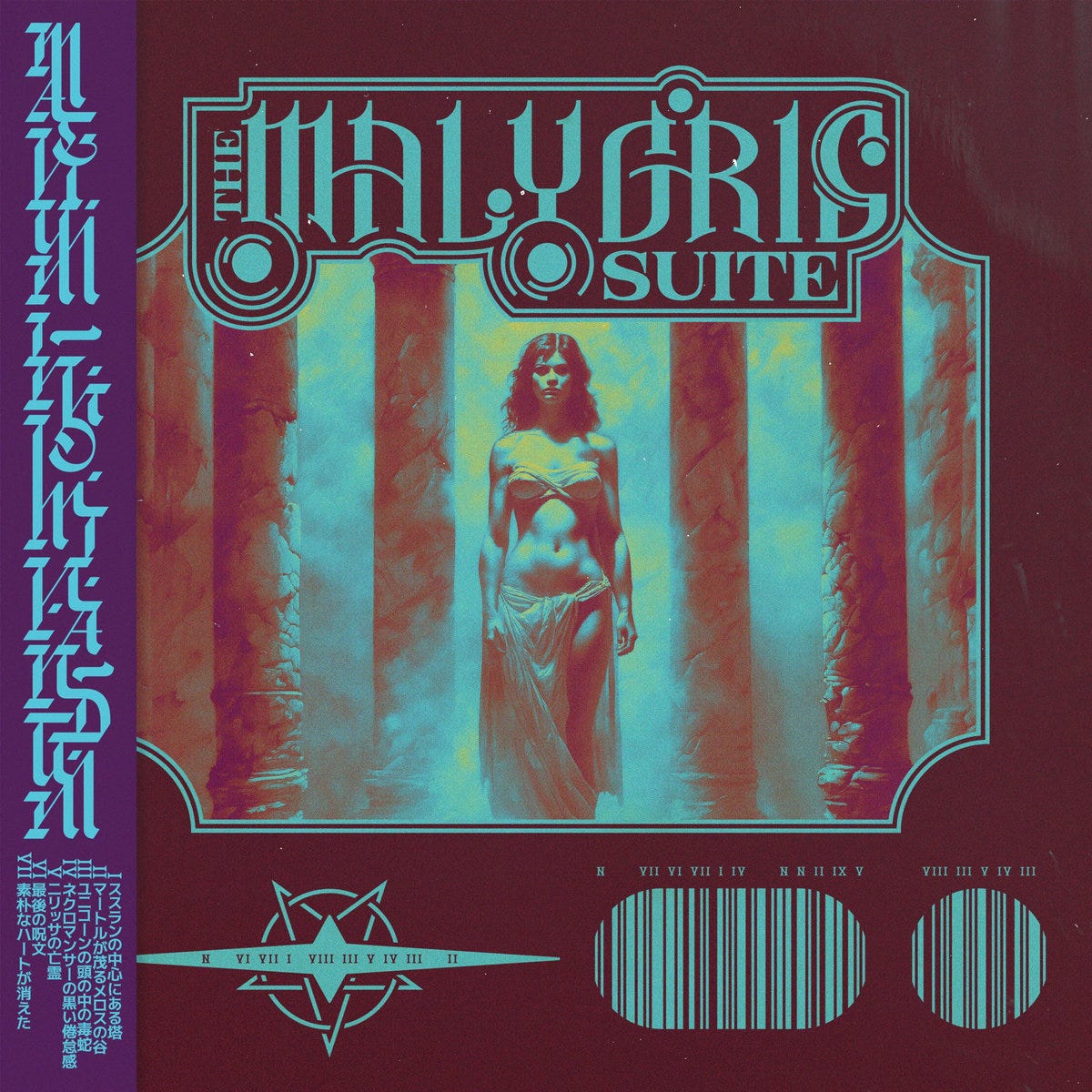
I was debating whether to put a more “traditional” barber beats album here, but since so many of my readers love classic science fiction and fantasy, I included this one. The Malygris Suite is a narrative concept album inspired by the works of Clark Ashton Smith, early 20th century writer of fantasy, science fiction, and horror.
This album’s an example of the subgenre of vaporwave known as barber beats, which is what you would get if vaporwave and downtempo jazz had a baby. Barber beats consist almost entirely of smooth jazz and R&B samples, with some reverb and drums mixed in to add a touch of menace to an otherwise placid sound.
The Malygris Suite is like a 1970s prog rock concept album if it was comprised almost entirely out of jazzy samples, synths, and some live instrumentals to fill out the sound. There are so many influences at play in this album that it rises above all of them. This album is a bit like the soundtrack to Cowboy Bebop in both spirit and style5. The Malygris Suite sounds almost like music from Mario Kart, if it was a dark fantasy racing game.
I haven’t read anything by Clark Ashton Smith. I’ve been meaning to for a while. But if he inspired music this good, that tempts me to drop everything and pick up his writing right now.
For fans of: King Crimson, dungeon synth, old pulp fantasy, Cowboy Bebop.
Best listened to: While driving on a highway at sunset through an unfamiliar desert landscape.
Standout track: “I: The Tower in the Heart of Susran” [the transition from Track 1 to Track 2 might be one of the best things I’ve heard recently].
If you liked this, check out:
A path by Haircuts for Men: A more traditional barber beats album by one of the titans of the genre.
Beyond the Last Redoubt Vol. 2 by Magnum Innominandum: A recent effort by the same artist, only he’s riffing on the 1980s synthpop/New Age hit “Moments in Love”. It’s almost entirely sample-free, using live instruments to give it an orchestral feel.
ロストエデンへのパス (The Path to Lost Eden) by Nmesh and t e l e p a t h テレパシー能力者
Nmesh and t e l e p a t h are some of the most celebrated musicians in the vaporwave scene, but they’re better known for other projects. But I think The Path to Lost Eden is their best work.
This album is loosely based on the film Apocalypse Now, and the music is interspersed from quotes from that movie and others like it.6 The movie quotes keep the album engaging, but the ambient parts between keep the sound in the background. Like many of the best ambient albums, it almost feels like a soundtrack to your life: a moody, melancholic trip through a jungle river to keep your work interesting.
Nmesh handles the first half of this album; t e l e p a t h handles the second. You would think this approach would be jarring, but it works. The album progresses from Nmesh’s sample-heavy cinematic style to t e l e p a t h’s more spacey, ethereal style by the end, but the transition is gradual, not abrupt.
If I had to put on my free-associative literature major hat on, the transition of styles on the album itself represents a journey. At the beginning of the album, the tropical sounds and movie snippets make you feel like you’re in a cinematic jungle. You’re on a mission, but you’re not sure what it is. In the middle, the human voices, frogs, and rain fade away, replaced by New Age synth pads. By the end, the jungle, the water, all has faded away. You forget you ever had a mission. The river is no longer water through a jungle; it becomes a path into the human heart.
This album has kept me company during long plane flights, intense study sessions, and periods of relaxation. I’ve listened to it for years and it has lost none of its escapist power. If I had to choose, this would be my favorite vaporwave album of all time.
For fans of: New Age music, classic movies, tropical landscapes.
Best listened to: Sitting in the back seat of a car, drifting in and out of sleep.
Standout track: “気高い真実”
If you liked this, you might also like:
新世界の弟子たち (Disciples of the New World) by desert sand feels warm at night: Possibly the most anxiety-relieving album ever. I used to listen to this one in my few hours of evening rest before working at a warehouse at 1 AM.
OVERGROWTH by OSCOB / Digital Sex: If you liked the tropical atmosphere and gradual shift in tone on The Path to Lost Eden, OVERGROWTH does something similar. It’s a narrative ambient vaporwave album that covers the transformation of a jungle into a futuristic, industrialized landscape. It goes from idyllic New Age music at the beginning to grimy Nine Inch Nails-style industrial music at the end.
Closing Remarks
After reading all this and hopefully listening to some of this music, you might ask yourself, how did you find all these albums?
Luckily for you (and me, because this post is getting long), I wrote a full article on how I discover new music.
That article is focused on music more broadly, rather than just vaporwave. If you want to explore vaporwave, here are a few other helpful sources to discover music at the far edge of this genre.
The Vapor Memory channel on YouTube serves as the de facto repository for all things vaporwave. Though not as active as it used to be, this channel hosts thousands of vaporwave albums and music from other adjacent genres. Subscribe to it for experimental releases, and dig around in their archive a little if you have time. It was only on Vapor Memory that I could find khoven’s LSD Pacifica after it was taken off other platforms.
I mentioned him in the “How to Discover New Music in an Age of AI” article, but Stephan Kunze is doing great work writing about vaporwave here on Substack. Some of the albums in this article were originally recommended b him. He runs a regular series of Vapor Talks where he interviews prominent vaporwave artists working in the genre right now. Read a few of them and you’ll realize that there’s more going on in the genre than ever before.
Stephan even just published an article entitled “10 Reasons To Get Into Vaporwave Now.” If you haven’t yet been convinced by my thousands of words on the topic, you should check that article out.

Finally, though they aren’t music writers or releasing albums of their own, Real Japanese Aesthetics is doing interesting work with vaporwave aesthetics, also here on Substack.
Much of vaporwave art is inspired by Japanese culture: you’ve probably noticed all the Japanese writing in the albums or musician names. This might seem strange because most of these artists are non-Japanese Westerners. But artists taking elements of a foreign culture and using it as a blank canvas for their own interests has a long history and will remain with us for the foreseeable future.
Now, it isn’t a bad thing that Westerners are remixing Japanese culture to make vaporwave. That’s how new cultural movements develop. But it does produce an unrealistic and one-dimensional image of another culture.
Real Japanese Aesthetics puts their own spin on this. They are a collective of Gen Z artists that take vaporwave and vaporwave-esque art and remix it from their own perspective as Japanese youth. Interested in memory, nostalgia, and history, one piece from them might be a deep dive into the meaning of cherry blossoms in Japanese history, another might be a comparison of modern anxieties with those of the medieval poet Saigyō. They just released an article where they spotlight the work of several Japanese musicians working today. It seems like they were bit by the same bug that caused me to recommend my own favorite music.

Though vaporwave may no longer be as big as it was ten years ago, but its influence is undeniable. In many ways, vaporwave prefigured the slowed-and-reverbed trend that’s so popular with music today, as well as the broader interest in liminal spaces.
As you’ve seen from the albums I’ve provided, vaporwave is undergoing fascinating changes as it hibernates underground. And sometime in the next decade, I predict vaporwave will experience a revival, similar to trip hop, trance, or other aging styles of music suddenly made cool again, befitting the 20 Year Rule.
If you listen to any of the vaporwave albums I suggested, and one stands out to you as particularly good, let me know in the comments section. Much of this music I’ve privately cherished for years and it would be great to know if you like it.
Also, let me know if you have music suggestions of your own, whether it is vaporwave or any other style of music that reminds you of what I’ve linked here. I wrote an article earlier about phonk music, one about YouTube mashup music, and one about sped-up trance music. More will come in the future.
I’ll leave my favorite YouTube channels from that time to the reader’s imagination.
The track I linked above sampled Sade, one of the most epoch-defining artists of the 1980s.
The final track on the album essentially takes John Cage’s “In a Landscape” and adds a bit of reverb to it. I first listened to this album before I learned about John Cage, thinking the piano composition was her own. Don’t let this dissuade you though. The rest of the album is worth it.
The 1971 version — sorry Johnny Depp.
Insight inspired by this comment by A Humble Traveller on a post of his. Check him out!
Such as The Tree of Life and Planet Earth.
I keep coming back to this. Thank you for making it. I love living in the future.
https://danrincon.bandcamp.com/album/spotlight-city
After listening to an album or two, I’d like to humbly contribute this suggestion to the canon.